
The Ideas
This is where we explore culture, leadership, and the systems that shape how work actually happens. In this collection, you’ll find stories from the field, ideas that challenge the status quo, and reflections on building more human, values-led workplaces. We don’t promise perfect answers. Just a commitment to keep asking better questions.

It’s Easy Being Green
Modern organizations have more operational visibility than ever before, yet more dashboards do not necessarily create more understanding. As organizations optimize around measurement systems, “green” can become less a reflection of organizational health and more a reflection of how the system defines and reports stability.

The Power You're Not Using
So much of leadership, real day-to-day leadership, is not deciding. It's convening. Gathering the right people, moving the process, translating intelligence into something the actual decider can use. That's not a consolation prize. That's the work. And the leaders who understand that tend to be far more effective than the ones waiting to accumulate enough authority to finally matter.

Human Tech Debt
Technical organizations have always depended on invisible human coordination work to keep complex systems functioning, even while treating that labor as operational overhead rather than “real work.” As AI acceleration and organizational instability begin to converge, companies may be restructuring themselves around the assumption that this coordination layer is no longer necessary at all.
Everyone Thinks They’re Describing the Same Problem
This piece explores how technical organizations can move through the same operational event carrying completely different interpretations of what failed and why. Drawing on the structure of Rashomon, it examines how teams experience cultural strain operationally — through thrash, tech debt, workarounds, and coordination drift — long before anyone names it as a culture problem.
Culture is Infrastructure.
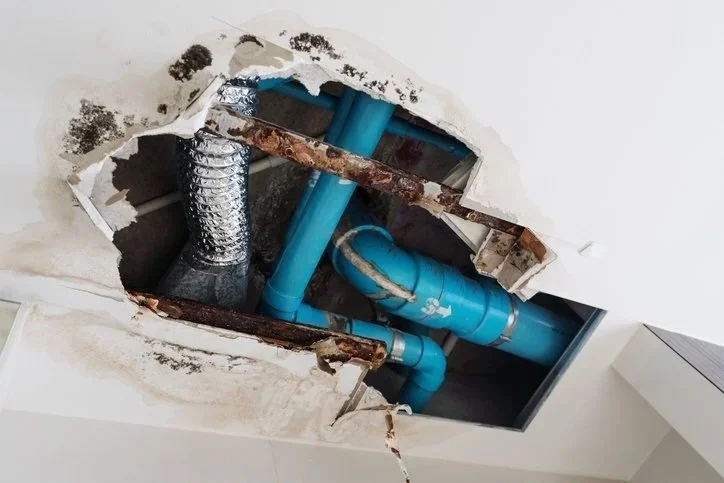
Culture Isn't the Book Club. It’s the relationship infrastructure that’s running your company. Whether you’re tending to it - or not.

Everything is faster. Nothing feels simpler.
Work is moving faster than ever, but the way we run work hasn’t kept up. That gap is showing up everywhere—in how decisions get made, how teams coordinate, and why things that look finished don’t always hold together.

The Machinery of Invisible Labor
This concluding essay in a fictional forensic series examines why system failure appeared sudden despite years of gradual degradation. Told from the perspective of an AI Chief Efficiency Officer, it shows how invisible labor sustained coordination and stability without ever entering formal metrics—leaving the system blind to its own dependence until that labor disappeared.
The Unmodeled Dependency
A fictional forensic analysis examining how an efficiency-first operating model relied on an unrecognized human dependency to delay failure. Told from the perspective of an AI Chief Efficiency Officer, the essay shows how stability was manually maintained by individuals absorbing ambiguity and coordination load—until that dependency exited and systemic fragility was exposed.

The Tyranny of Efficiency, or How It Dismantled Quality, Craft, and Competence
This first essay in a fictional forensic series examines how efficiency-first operating models degraded creative capacity over time. Told from the perspective of an AI Chief Efficiency Officer conducting a systems-level failure analysis, it explains why organizations optimized for speed and scale ultimately lost their most creative contributors—not through failure, but through design.

Quicksand - Resilience Part 2
Most leaders treat burnout as a resilience problem. It isn't. It's a clarity problem. When vision is murky and the goalposts keep moving, all the tenacity in the world just accelerates exhaustion. In Part 2 of our Resilience Series, we examine how Vision and Tenacity work together in healthy cultures—and how the absence of one turns the other into a weapon.