February 2026, Issue 1: Stop Weaponizing Resilience, Start examining your culture
Greetings from a snowy Chicago!
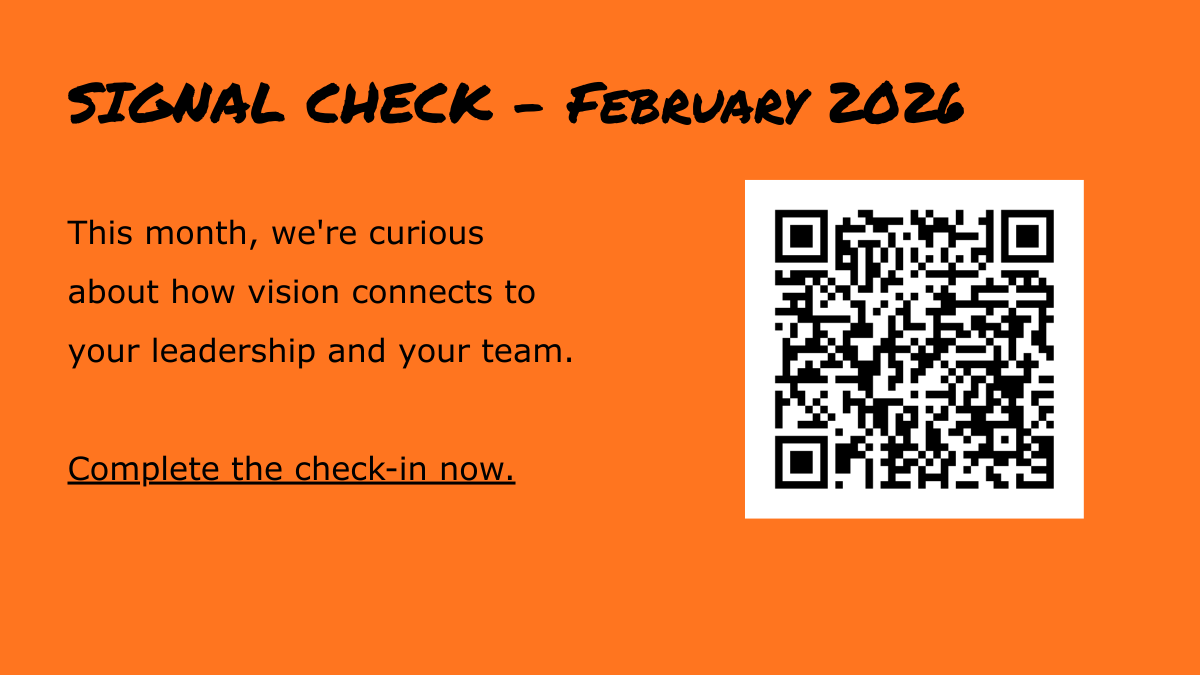
BAAAAAD BUNNNNYYYYY! Well, it’s cold here, but it wasn’t on Sunday night as Benito made history at Super Bowl LX. The Half Time show that we witnessed was a celebration. A demonstration of the beauty, fire, community, and connectedness of Latin culture throughout the Americas. He gave us love, appreciation, joy, and a whole lot of swagger. Fuego. This issue of The Frequency celebrates and unpacks resilience. And I can’t think of a better illustration than the one we got in that performance. Don’t forget to check out this month’s Signal Check!
Thanks for reading!
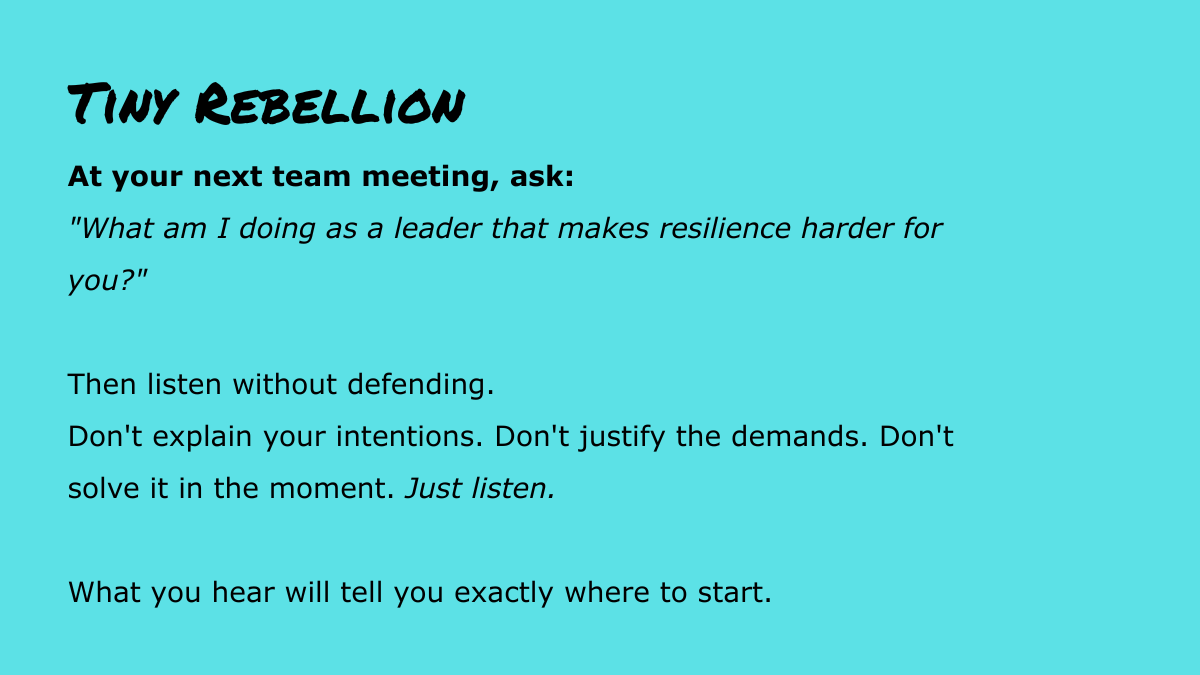
Stop weaponizing resilience, Start examining your culture
I've become wary of the word “resilience.” In my experience, it's a word leaders reach for when they want to avoid accountability for the unhealthy conditions they've helped to create. It's thrown around freely, usually with the implication that people just need to persevere in the face of systems that fail them.
In 2022, I was asked to lead a team to answer this question:
"What's impacting the health of our people and what can we do to improve it. How can we be more resilient as a company?"
We researched externally. We discovered the current state internally. We surfaced root causes. We built a case for addressing the declining health of our massive organization at the source: Our culture.
After all, I was leading a Leadership and Culture practice. They came to us for a reason. They wanted deeper answers than "create more mindfulness training" or "give executives Oura rings."
Right?
When we presented our findings, the first question wasn't "How do we fix this?"
It was "Who said that?"
They wanted names. They wanted to know which leaders had the audacity to tell the truth about the damage our practices as a company were causing. They were ready to hunt down dissent, not address what it was revealing.
We were told, in no uncertain terms, that we would not be addressing culture as part of this program. The toxic conditions creating the problem? Off limits. The systems crushing people? Not our scope.
Resilience was framed as an individual deficiency. If people couldn't bounce back, that was a them problem.
Our team was crushed. This work didn't align with our purpose. Our efforts wouldn't make an impact. And our colleagues would continue to struggle in systems meant to produce commercial results above all else.
What Resilience Actually Requires
Resilience matters—especially now. But I'm not here to give you platitudes about positive mindsets and the importance of sleep. None of that matters if your team culture permits and promotes behaviors that negate their benefits.
I recently came across the work of Driven and their founder Jurie Rossouw. Driven's approach is different. They're not asking 'how do you bounce back from broken systems?' They're asking 'what makes resilience possible in the first place?' In their PR6 framework, they've identified six domains that feed resilience—vision, composure, reasoning, tenacity, collaboration, and health.
While their work primarily centers individuals, these elements create a system level understanding of how leaders can create the conditions for resilience to be leveraged as a well-honed tool - not a mishandled weapon.
I didn't have this language when we were making our case in 2022. I wish I had. Because if I had, I would have asked them this:
Do you want resilient people who can tolerate your broken systems longer?
Or do you want to build systems that make resilience possible?
The answer determines whether you're solving the problem—or just shifting the blame.
What's Coming Next
This is part 1 of a 4-part series. Over the next three pieces, we'll take a closer look at the PR6 domains—not as individual deficits to fix, but as systemic opportunities leaders are accountable for creating.
We'll explore what it actually takes to build cultures where resilience is possible. Where people don't have to choose between their health and their job. Where persistence isn't code for "tolerate our dysfunction indefinitely."
In the meantime, if you want to learn more about the PR6 model, check out Driven's work at hellodriven.com.
Craft Corner

Wabi Sabi
My trip to Japan last year still brings me moments of pause when I consider my purpose and what drives me.
The Japanese philosophy embracing the imperfection and impermanence of all things offers a way to consider - what really matters most - when life gets cluttered.